Hard chrome has been the mainstay of repairing scored and worn machinery parts. Thick deposits laid down and then ground back bring a component home to drawing.
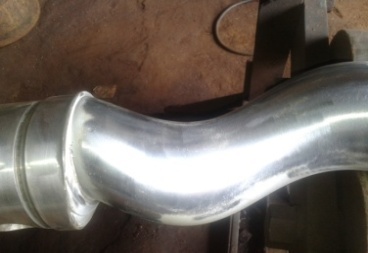
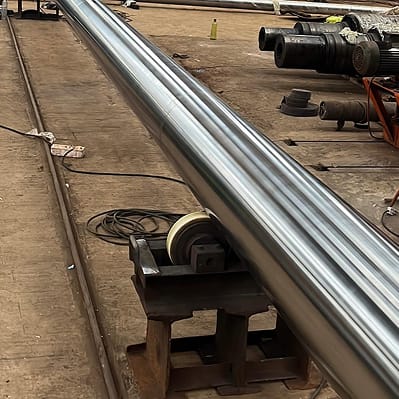
Plated and polished — the surface this page is named after
A long-wearing surface, on almost anything
Chrome creates a hard, low-friction face that is valued across machinery and mating-surface applications. Its resistance to abrasive resins extends life considerably while improving release characteristics — which in production terms means more parts between changeovers.
Combined with grinding, it is also the most economical way to save a part that would otherwise be scrapped.
Capacity
Max plating diameter
Ø 750 mm
Max component length
12 000 mm
Post-plate grinding
In house
Thickness verification
Every batch
Why chrome
Increased life of new parts
Corrosion protection
Excellent adhesion
Low coefficient of friction
Restoration of worn or damaged parts
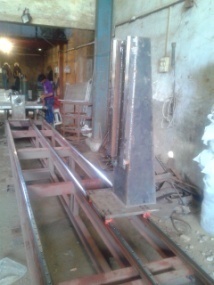
The line — 12 m tanks
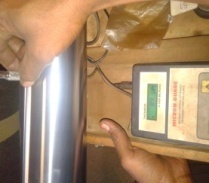
Coating thickness checked before grinding
From the shop floor
Plated, ground and measured.
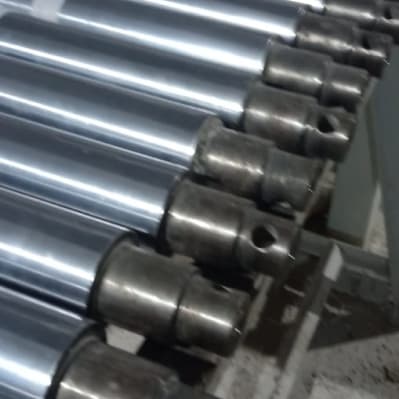
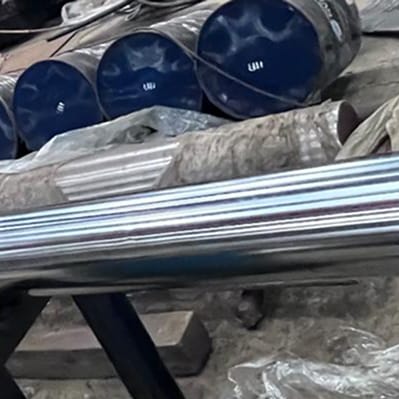
Plated rods, racked
Long shafts after plating
Plated bar, polished
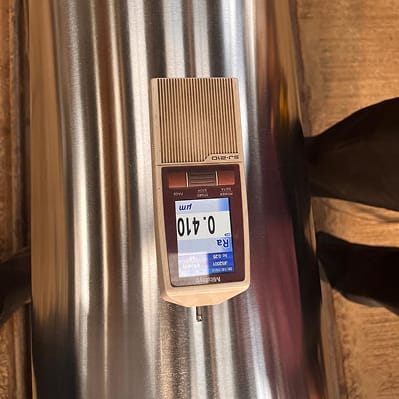
Surface roughness checked — 0.410 µm
Not sure it can be saved?
Send the dimensions and the depth of the damage. Most scored rods and rolls come back.